Frequently Asked Questions
|
|
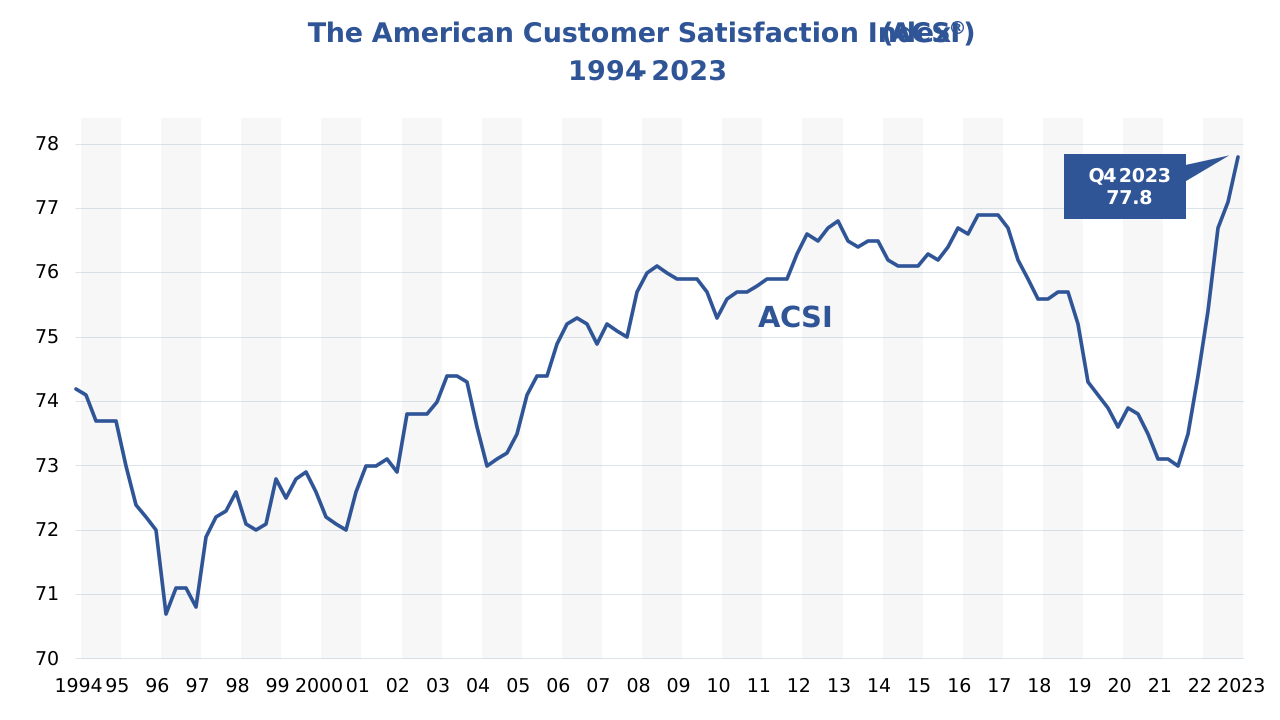
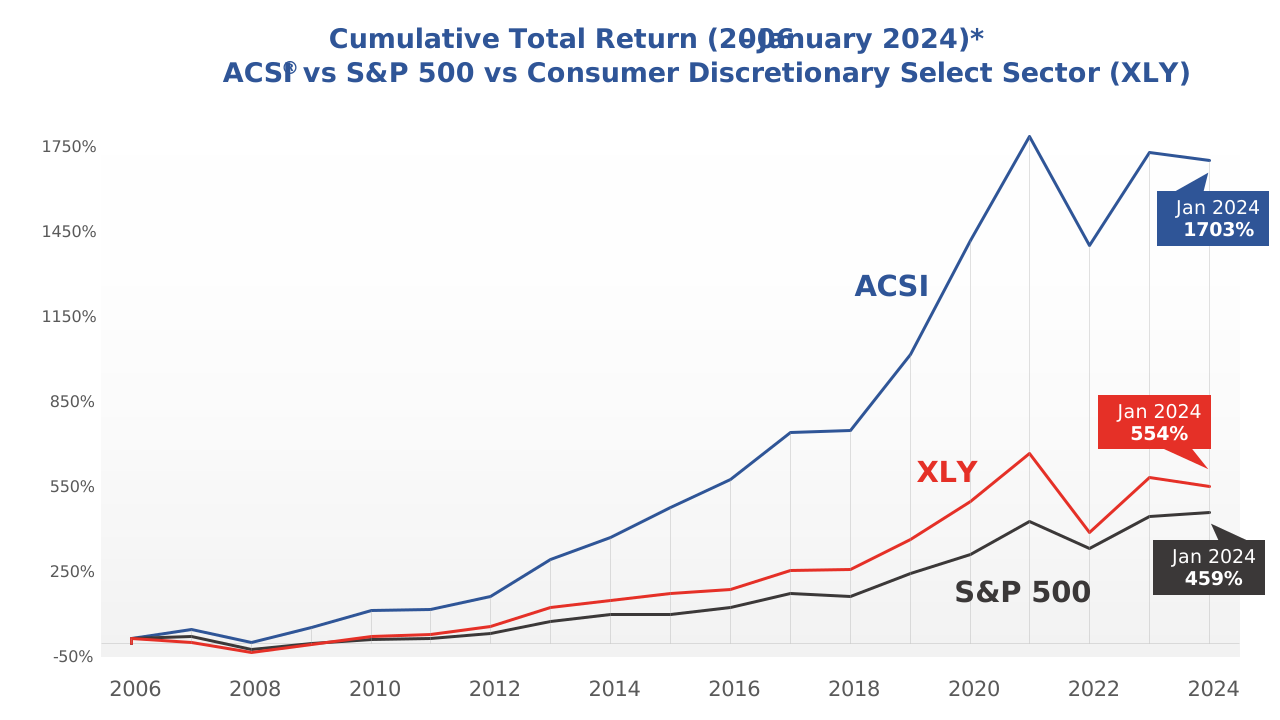
ACSI provides answers to frequently asked questions about its history, development, funding, how to subscribe, and so forth. Click on a question below to view answers relating to your selection. Should you have further questions, contact information is also provided What is the American Customer Satisfaction Index? Why was a customer satisfaction index developed? What can ACSI tell us? Who benefits from ACSI? How is the Index used? How is the Index constructed? How are ACSI data collected? How are company brands measured? How are the measured companies selected? Do they change over time? When are ACSI results publicly released? Is the information behind the measured company scores available? Can a company not included in ACSI get its own customer satisfaction index? What is the American Customer Satisfaction Index? The American Customer Satisfaction Index (ACSI) is an economic indicator based on modeling of customer evaluations of the quality of goods and services purchased in the United States and produced by both domestic and foreign firms with substantial U.S. market shares. (back) Why was a customer satisfaction index developed? The Index was developed to provide information on satisfaction with the quality of products and services available to consumers. Prior to the development of ACSI, no national measure of quality from the perspective of the user was available. ACSI was designed to measure the quality of economic output as a complement to traditional measures of the quantity of economic output. (back) What can ACSI tell us? Some ACSI findings from more than 16 years of data include:
Who benefits from ACSI? How is the Index used? ACSI benefits corporate managers who need to know how to improve their company's current condition by allocating scarce resources to maximize the strength of their customer relationships. Companies use ACSI as a tool to optimize customer satisfaction to in turn drive customer loyalty and thereby corporate profitability. It is also used for competitive and cross-industry benchmarking. ACSI benefits investors who need to understand the relationship between a company's current condition and its future capacity to produce wealth. In capitalistic free markets sellers that do well by their customers are rewarded by more business from buyers and more capital from investors. Likewise, when businesses fail to satisfy customers as effectively and efficiently as competitors, both customers and investors will turn elsewhere. ACSI benefits government which needs to know how best to encourage economic growth and living standards for its citizens, and it benefits consumers who need to have a voice in measures that reflect those economic living standards. (back) How is the Index constructed? ACSI uses a multi-equation, econometric model to produce four levels of indices or scores: a national customer satisfaction score, 10 economic sector scores, 45 industry scores, and scores for more than 225 companies and federal government agencies. (back) How are ACSI data collected? Customers of all companies (and some federal agency customer segments) are selected from national and regional probability samples by screening a randomly chosen adult (age 18 to 84 for private sector companies) in each telephone household. The respondent is asked questions about the purchase and use of specific products and services purchased within specified, recent time periods (these periods vary according to the product or service). Those who qualify as respondents are then asked from which company or which brand they have purchased and responses to the ACSI survey questions are coded as a customer interview for that company. The ACSI for each company is based on a sample of 250 customer interviews with more than 70,000 interviews conducted annually. (back) How are company brands measured? Customer satisfaction is measured at the company level. Because customers often respond with a brand name rather than a company name when asked about the purchase of products and services, all the brands produced by the companies measured in ACSI are programmed into the computer-assisted-telephone-interviewing (CATI) system. When a customer identifies a specific brand, the respondent is coded as a customer of the company that produces that brand. ACSI maintains brand lists for over 5,000 different product brands of its measured companies. (back) How are the measured companies selected? Do they change over time? ACSI measures customer satisfaction with the products and services of more than 225 companies in 45 household consumer industries and over 130 major customer segments of federal agencies. Within each industry companies are selected on the basis of total sales and the measured companies represent a significant proportion of the overall market share of the industry. Individual companies are added or deleted from ACSI as their market position changes or as a result of mergers and acquisitions. Industries are added as new types of consumer products or services emerge and grow over time like Internet retailers or wireless telephone service carriers. (back) When are ACSI results publicly released? ACSI was first published in October 1994, with updates released each quarter. Starting in May 2010, ACSI makes data available to the public on a more frequent basis, moving from quarterly to monthly updates that take place on the third Tuesday of each month. This change allows stakeholders to focus more in-depth on different segments of the economy over the entire calendar year. The national ACSI index continues to be updated quarterly on a rolling basis, factoring in data from 10 economic sectors and 45 industries. (back) Is the information behind measured company scores available? Only the customer satisfaction (ACSI) score for each company measured in ACSI is published. Companies can subscribe to ACSI to receive additional confidential results for themselves and industry competitors, providing valuable insights on the causes and consequences of satisfaction. Subscribers receive specialized ACSI modeling and analysis software for benchmarking their own results against industry competitors. (back) Can a company not included in ACSI get its own customer satisfaction index? Companies not included in ACSI can obtain an index of their own. Although not part of the publicly released ACSI, these companies receive custom research using the same methodology and can benchmark their results with best-in-industry and best-in-class companies. (back) |