The American Customer Satisfaction Index - The voice of the Nation's Consumer
Fourth Quarter 2009

Fourth Quarter 2009


Print


Q4 2009: Retail Trade; Finance & Insurance; E-Commerce

February 16, 2010

Commentary by Professor Claes Fornell
The Donald C. Cook Professor of Business Administration
Director, National Quality Research Center, Stephen M. Ross School of Business, University of Michigan and
Chair, ACSI LLC

Customer Satisfaction Resilient—Essential for Economic Recovery

Netflix, Amazon, Nordstrom, Barnes & Noble, and Publix Remain Strong

Large Gains for Dollar General, UnitedHealth, TD Ameritrade, E*Trade, and Priceline

Customer Challenges for Macy’s, Safeway, JPMorgan Chase, and Bank of America

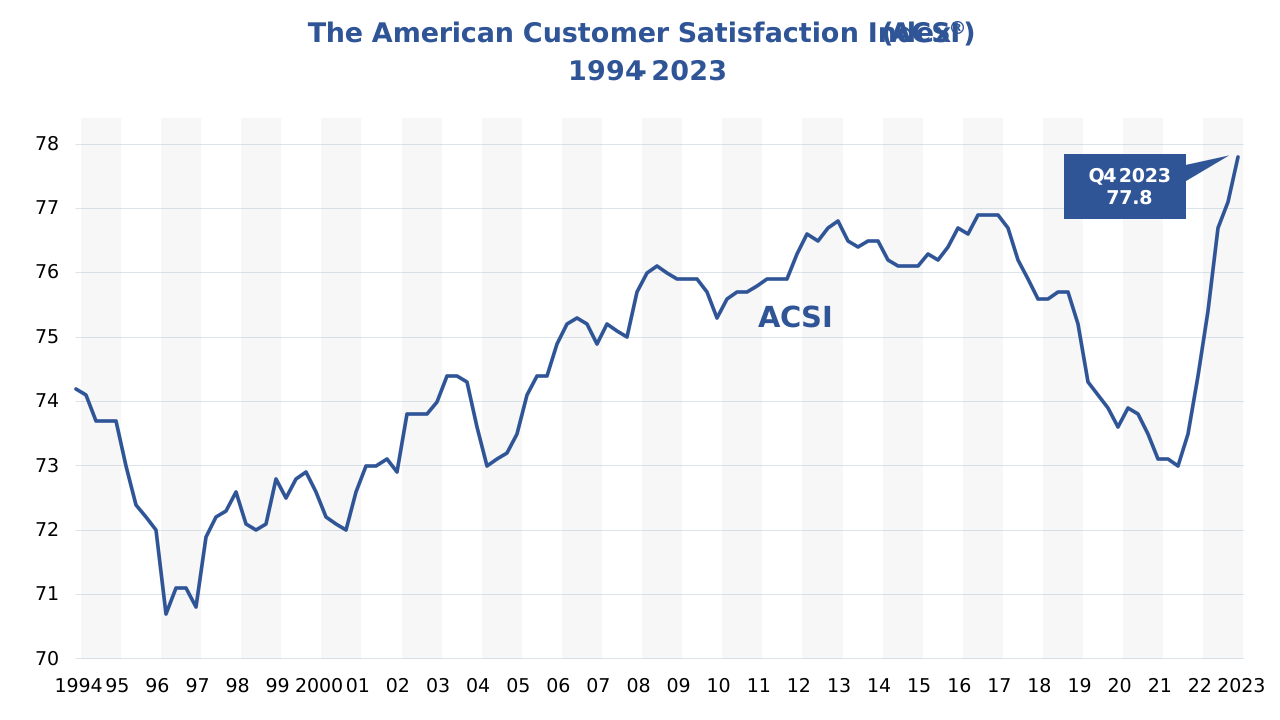
In the aggregate, the American Customer Satisfaction Index (ACSI) remained largely unchanged. The Index dipped by 0.1%, but among the companies covered in the fourth quarter of 2009, gainers outnumbered decliners and customer satisfaction remained at a high level of 75.9. This was slightly better compared to a year ago, and should be seen as a good sign in a troubled economy. Because economic recovery is highly dependent on consumer spending—and customer satisfaction tends to strengthen consumer demand—at a minimum, the latest ACSI reading does not add more economic woes. Despite anecdotal evidence to the contrary, most companies are not doing a bad job at customer service. As ACSI data showed this quarter, some companies have very satisfied customers.


ASCI 4th quarter 2009 chart


While not evident from the overall ACSI score, customer satisfaction improved in most of the industries measured in the fourth quarter. The Internet brokerage category was up by 5.4%. Internet travel websites, health insurance, and gasoline stations improved by 2.7%. Department and discount stores were up by 1.4%, specialty retail stores by 1.3%, life insurance by 1.3%, and Internet retail by 1.2%. Four other industries were stable compared with the fourth quarter of 2008: supermarkets, drug stores, banks, and credit unions. Only one industry, property and casualty insurance, showed a small drop of 1.2%. Among individual firms, gainers outnumbered decliners by a strong margin: 62% improved, 19% declined, and 19% were unchanged. One reason for the slight decline in the overall Index is the changing composition of the economy. Sectors with lower ACSI scores (such as government) have increased in relative size, while other sectors with higher ACSI scores (such as manufacturing) have shrunk.

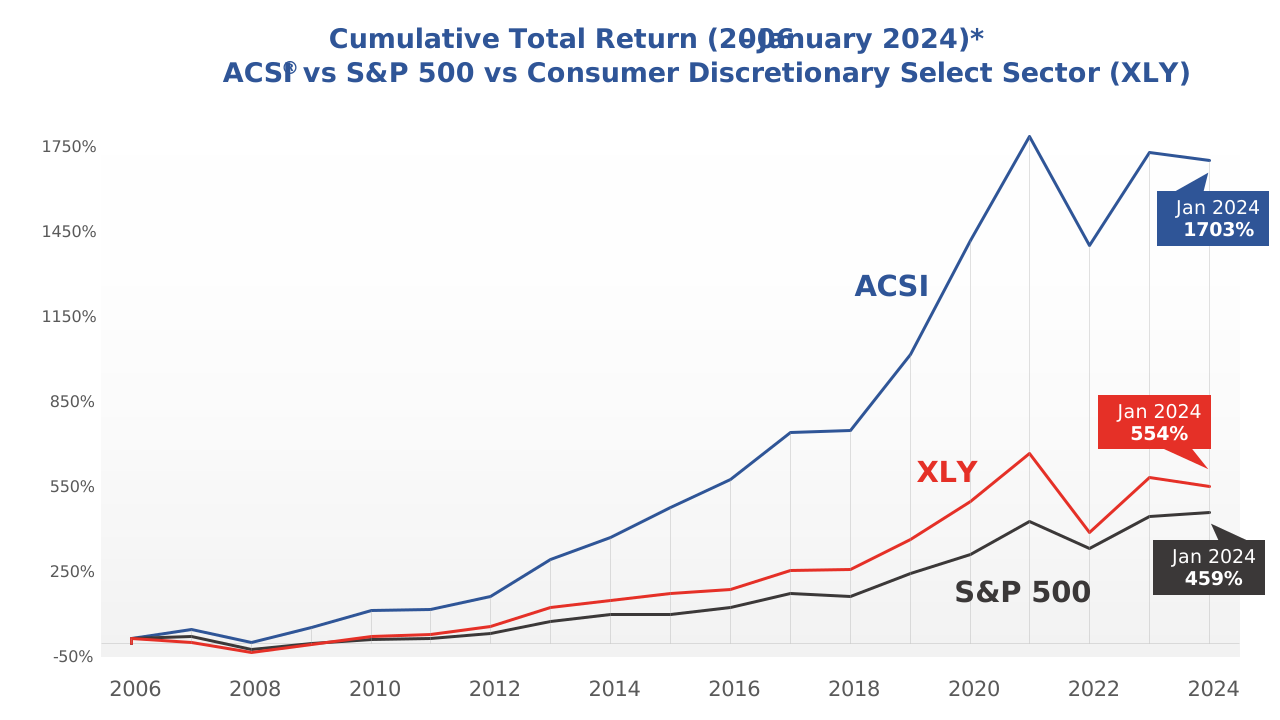
One year ago, in the midst of a free fall in the stock market, companies that improved their customer relationships were punished less by investors. As the market rebounded, the rewards have been greater for companies with improving customer satisfaction. On average, companies that did well in ACSI saw their stocks increase by 75% in 2009. In contrast, stock prices for those with declining ACSI scores rose 22% over the same period, which is slightly less than the 26% gain for the S&P 500.

Even though fourth quarter GDP growth at 5.7% was stronger than expected, a good deal of it was due to inventory reduction. Consumer spending remained weak with a growth of 2% and in line with the prediction ACSI provided in the third quarter. The spending situation has not changed much since then. The ACSI level is about the same and consumers remain cautious. As long as unemployment remains high and credit tight, it is difficult to see how we can get to a sustainable pace of consumer spending growth. But it is not all bad: the “will to spend” is evidenced by high customer satisfaction. The issue is whether or not consumers have the “means to spend.” The recent news about the decline in unemployment and the rise in manufacturing hiring may not only lead to more people working, but may also dampen the fear of job loss. If so, the means to spend will face less of a hurdle.

4th quarter 2009 PCE ACSI chart

Retail

Customer satisfaction with the retail sector improved 1.3% to a score of 76.2. Gas stations gained for a second straight year, up 2.7% to 76—the industry’s highest score since 2002. Lower price is the main reason: the average price of a gallon of gasoline fell 28% from $3.21 in 2008 to $2.31 in 2009. Another contributor is the acceleration of the industry trend of pairing gasoline with convenience products. By expanding the assortment of these products, gas stations have improved buying convenience and time savings for consumers to a point where, according to customers, some stations have more the feel of a convenience store that also sells gasoline.

Department and discount stores and specialty retailers also contributed to the boost in the sector. Department and discount stores climbed 1.4% to an ACSI score of 75, while specialty retail stores improved 1.3% to 77. Two other retail categories, supermarkets and health and personal care stores, were unchanged. According to the Commerce Department, retail sales rose 1.9% for the fourth quarter compared to 2008, and December sales were up 5.4%. The traditional emphasis on discounting had a positive impact on customer perceptions of value for money, but the sector also benefited from a greater emphasis on customer service. In fact, better quality of service was the most potent driver of the improvement in satisfaction with retail

Supermarkets

The supermarket category remained unchanged for a third straight year, seemingly unaffected by fluctuations in food prices, which fell 2.4% in 2009—the first annual decline since 1961. By contrast, prices rose 5.7% in 2007 and another 6.6% in 2008, the highest single-year increases in thirty years. Six of the seven largest supermarket chains showed modest to strong improvement in customer satisfaction, with perennial industry leader Publix up 5% to 86, the highest company ACSI score ever recorded in this industry. Publix continues to parlay its success into expansion and innovation, including its Apron’s Simple Meals in-store cooking demonstrations and its GreenWise Markets with an emphasis on natural and organic items

Two grocery chains known for discount pricing more than quality also improved. SUPERVALU and Wal-Mart’s grocery business were up 4% to 77 and 71, respectively. Perhaps this will change the stock performance of these companies for the better. Both have been underperformers over the past year. The increase in customer satisfaction for SUPERVALU suggests that it may have succeeded in integrating its 2006 acquisition of Albertson’s, a move that nearly doubled its number of stores. Wal-Mart, on the other hand, has focused on productivity improvement through layoffs and store closings, but has nevertheless been able to improve store quality and make employees happier with bonuses and profit-sharing. These efforts have helped Wal-Mart reduce the customer satisfaction gap to its nearest supermarket competitors, but its 4% ACSI jump is still not enough to lift the retailer out of last place in the industry.

A year ago, Safeway, the third largest grocery chain, boosted customer satisfaction on the strength of its new Lifestyle store. Now, this appears to have been a short-term success or a novelty that has worn out. Safeway fell 4% to an ACSI score of 72. The conversion of existing stores to the Lifestyle format is now almost completed, but will it help? The effort has been expensive and, in view of the shaky economy, perhaps risky. As the stock market rebounded in 2009, Safeway’s stock was left behind and fell 9%.

Department & Discount Stores

Customer satisfaction with department and discount stores climbed 1.4% to an ACSI score of 75, matching a five-year high. Better quality of service is behind the improvement. Nordstrom has continued to make service and product quality the differentiator throughout the recession. As a result, it not only stayed in the lead, it also increased its ACSI score by 4% to 83. Other chains posting strong improvements include Target (up 4% to 80) and Dillard’s (up 4% to 78). Both survived 2009 with fewer store closings and layoffs than most of their competition. Nordstrom, Target, and Dillard’s all rebounded strongly in market value as well. On average, department and discount stores that improved in ACSI saw their stocks increase by 125% in 2009.

Dollar General, up 5% to an ACSI score of 79, reversed its slide from a year ago. At that time, the recession drove many more affluent shoppers—who are typically harder to please—to discounters, and customer satisfaction suffered. More (at least previously) affluent people continue to frequent discounters, but not to the same degree and among those who do, their expectations seem to have adjusted.

Among the retailers, Macy’s is notable for bucking the trend. Its ACSI score retreated by 4% to an industry low of 71. Macy’s engaged in a major restructuring at the beginning of 2009, shedding more than 7,000 jobs across some 800 locations. At the same time, Macy’s rolled out a new customer-focused plan to drive sales, but it has taken time for the plan to have a positive effect.

Specialty Retail Stores

Satisfaction with specialty retailers improved 1.3% to an ACSI score of 77, an all-time high since industry measurement began in 2001. Bookseller Barnes & Noble led all companies for a third straight year and at 84 (+1%) the company no longer ties Costco for first place. Looking at the two membership warehouse clubs, Costco dipped 2% to 81, but still maintained its lead over Sam’s Club (unchanged at 79).

The office supply business rebounded from a year ago. OfficeMax improved 4% to an ACSI score of 77, matching Staples (+1%) and only slightly ahead of Office Depot (up 1% to 76). Office Depot’s gain is most compelling considering its difficult position a year ago, when it closed more than 100 stores to avoid bankruptcy and stock price fell 80%. In the wake of its reorganization and cost-cutting efforts, Office Depot’s uptick in customer satisfaction has correlated with a strong rebound in market value, up 116% for 2009

Home improvement retailer Home Depot improved 3% to an ACSI score of 72, but could not match the pace of Lowe’s, which gained 4% to an all-time high of 79. The year 2009 marks the eighth consecutive time that Lowe’s has bested its larger rival in customer satisfaction. The good news for Home Depot is that its latest improvement continued an upward trend from the retailer’s all-time low of 67 in 2007. Despite recent progress, Home Depot remained at the bottom of the category this year. Weak customer service relative to other retailers has been Home Depot’s greatest obstacle to keeping pace with the rest of the industry.

Finance & Insurance

The Finance and Insurance sector—including banks, credit unions, and property, life and health insurance—improved 1.4% to an ACSI score of 77.1. Even though some individual banks plunged in customer satisfaction, banks and credit unions as a whole were unchanged from a year ago with ACSI scores of 75 and 84, respectively. Life insurance posted a small improvement of 1.3% to a score of 79, while customer satisfaction with health insurance went up 2.7% to a record-high score of 75. Property and casualty insurance dropped slightly, down 1.2% to 80.

Banks and Credit Unions

Customer satisfaction with banking, which includes checking, savings and personal loan accounts but not mortgages or investments, showed no change in the aggregate, but was quite turbulent for individual banks. Small banks topped the industry, as they have every year, leading the way with an ACSI score of 80 (steady since 2007). Small banks tend to provide better and more personalized service, and some were left virtually untouched by the mortgage crisis. Credit unions fared even better with an overall ACSI of 84, built largely on the same individualized approach to service that distinguishes smaller banks.

Wells Fargo has emerged from its acquisition of Wachovia stronger in terms of customer service, rising slightly by 1% to an ACSI score of 73, which is the top score among measured banks in 2009. Wells Fargo seems to have benefitted from Wachovia’s legacy of strong customer satisfaction; for many years, Wachovia was the industry leader. By contrast, JPMorgan Chase has not performed nearly as well following its acquisition of Washington Mutual. The subsequent reorganization has been slow, and many Washington Mutual branches were still not rebranded as of the fourth quarter of 2009. Customer satisfaction with the new, larger JPMorgan Chase dropped sharply by 7% to an ACSI score of 68. To some extent, the story is the same for Bank of America. Its acquisition of Merrill Lynch made it the world’s largest financial services company, but massive losses have led to layoffs and substantial cost-cutting. Bank of America’s ACSI score dropped even further than JPMorgan Chase, tumbling 8% to an industry low of 67.

Life and Property Insurance

Customer satisfaction with life insurance inched up 1.3% to an ACSI score of 79, while property and casualty insurance declined by 1.2% to 80. Several insurers in both the life and property categories improved their customer relationships in 2009. Among life insurers, Northwestern Mutual and New York Life gained 4% to 81 and 80, respectively. Northwestern Mutual has consistently maintained the highest financial ratings among insurance providers. Similar to the banking industry, the smaller life insurers tend to hold the top of the life insurance category. Giants MetLife and Prudential experienced small declines in 2009 and fell 1% and 3%, respectively, to the same ACSI score of 77.

Among property and casualty insurers, four of the five measured companies improved (with one steady), but the gains were all small. State Farm maintained its industry lead, up 3% to an ACSI score of 82, followed closely by GEICO (+1% to 81) and Progressive (+1% to 80). A small decline in premiums has created better value for money. The decline in the industry overall is attributable to a 3% ACSI drop in the aggregate of all other smaller insurers, which are challenged to provide the same rates as their larger competitors, focusing instead on service.

Health Insurance

Health insurance gained 2.7% to an ACSI score of 75, the second straight year of improvement. Smaller insurers led the industry, up 1% to 77, followed by Blue Cross and Blue Shield, unchanged at 73. UnitedHealth made a large leap, up 14% from an industry low of 63 to 72. Aetna earned a somewhat smaller, but still substantial 8% improvement to 70, while WellPoint slid 2% to a category low of 67.

Coinciding with its jump in ACSI, UnitedHealth rolled out a plan to “insure the right to insurance,” whereby an individual with other employer-sponsored or individual insurance can purchase a plan that will take effect in the case of job loss or early retirement. UnitedHealth may also have benefitted from a shift in its enrollment, losing 1.7 million commercial customers in 2009, 6.5% of its total enrollment, while gaining 1.1 million under its Medicare and Medicaid plans. Both Aetna and UnitedHealth have also emphasized coverage of preventive medicine and early detection measures as a way to reduce healthcare costs. Both have offered new plans with discounts for prescriptions and treatments for those with chronic illnesses, so long as these patients demonstrate a commitment to improving their health.

The efforts of UnitedHealth and Aetna may signal a movement by the industry to demonstrate that it can rein in costs and provide better service so as to reduce the need for a public option or similar reform. Value for money, as perceived by the customers of health insurers, has improved over the past two years. Even though premiums continue to rise, the pace has slowed, particularly for those with individual plans whose numbers have grown considerably in recent years as fewer employers now offer insurance plans. As the health care debate continues, there appears to be a shift in customer perceptions about health insurance—perhaps because of doubts about the future of the system and worries about government involvement—toward a more favorable attitude about customers’ current plans.

E-Commerce

Customer satisfaction with e-commerce, including retail, brokerage and travel websites, improved 1.8% to an overall ACSI score of 81.4, nearly matching the all-time high of 81.6 in 2007. All three types of websites improved satisfaction over the past year, with retail up 1.2% to a score of 83, travel websites up 2.7% to 77, and brokerage up 5.4% to 78. The improvement for brokerages was the biggest jump for any industry or category in the fourth quarter.

Internet Retail

Following a small drop last year, the retail category has reversed, improving 1.2% to an ACSI score of 83. Amazon was unchanged at 86, while eBay made a modest 1% gain to 79, but the latter has not managed to increase its customer satisfaction over the years. The current score for eBay is lower than it has been in any other year except 2008. The aggregate of all other online retailers improved 1% to match the industry average of 83, and only one website declined—computer hardware and software retailer Newegg fell 2% from its lofty spot a year ago to tie Amazon at 86.

For the first time, Netflix assumed the industry’s top spot, rising 2% to a very high ACSI score of 87. The online video rental retailer has benefitted from its new video-streaming capabilities, allowing subscribers to rent films that can be viewed instantly without waiting for mail delivery. The company’s subscription base grew 31% between 2008 and 2009, revenues were up 24%, and stock price increased 84% during the same period.

Overall, retail shopping online continues to be superior to in-store shopping (83 compared with the retail sector average of 76.2). Free shipping promotions, competitive pricing, and the ability to browse and research a wide selection of merchandise from the comfort of one’s home have made online retailing a more attractive and rapidly growing shopping alternative.

Internet Brokerage

The rise in equity prices in 2009 advanced investor satisfaction with online brokerage services just as the slump in the market at the end of 2008 caused satisfaction with those same services to plunge a year ago. At that time, the category dropped 6.3% to an ACSI score of 74, the lowest level since 2002. For 2009, the industry’s ACSI rebounded close to its pre-recession level, up 5.4% to 78.

The large full-service investment brokers Fidelity and Charles Schwab did not fall as much in 2008 and also did not rebound as much in 2009. Schwab improved 1% to a score of 79, while Fidelity slipped 1% to tie Schwab for the industry lead. The smaller firms have had a more volatile ride. TD Ameritrade and E*Trade plummeted at the end of 2008 and then recovered sharply in 2009. Ameritrade had one of the largest single-year ACSI drops ever in 2008, falling 11% to a score of 71. For 2009, the broker gained 7% to 76. E*Trade, though last in the industry, also improved 7% to 74. For the big brokers, the quality of their full range of investment services has provided some insulation from the effects of the market slump, while the smaller firms have tended to be more impacted—positively and negatively—by the ups and downs of the market.

Internet Travel

Customer satisfaction with travel websites offering bookings for airfares, hotels, rental cars, and vacation packages rebounded 2.7% to an ACSI score of 77. Much of this seems to be due to promotional pricing and package deals. According to customers, value for money was much better compared with one year ago. All measured travel sites improved satisfaction except Travelocity, which anchored the bottom of the industry at an unchanged score of 75. Expedia was the top measured company for a second year and gained 3% to 79, followed by the aggregate of smaller websites (up 1% to 78) and Orbitz (up 3% to 76).

Priceline has changed its business model over the past few years, moving away from the “Name Your Own Price” auction bid approach to booking travel reservations along the lines of conventional full-service online travel agencies. The Priceline website is now organized much like those of its competitors. Customers can still choose to bid, but this is no longer the only option. More alternatives, up to a point, usually increase customer satisfaction and this has been the case for Priceline, now up 6% to an all-time high ACSI score of 76. Value for money remains high, strengthened by elimination of booking fees, while service quality has improved. Alongside the improvement in customer satisfaction, Priceline’s stock value soared by nearly 200% in 2009.

 
August 2010 Results Available Now
The Satisfied Customer
The definitive book on understanding the customer relationship by ACSI founder Claes Fornell. Learn more
E-Government Sponsor
ForeSee Results

canadian pharmacy for cialis
cialis 20 mg 10 pills
cialis fast shipping
buy cialis today
brand cialis
best cialis price
best buys generic cialis pills
buy cialis in the uk
cheap cialis tablets
buy cialis online uk
buy cialis without prescription
cialis fedex overnight shipping
canadian pharmacy cialis
buy cialis online now
cialis canada generic
cialis erect penis
buy cialis online cheap pharmacy here
cialis 20 mg price
buying cialis in uk
buy cialis fda
cialis canada rx
best price cialis
uk cialis sales
buy cialis fast shipping
buy cialis pills generic
buy cialis free shipping
best value cialis
cialis
buy cialis huge discounts online
buy cialis pharmacy
american cialis
canada cialis
best price viagra cialis
cialis best price buy online
canadian drugs cialis
cialis ed drug
cialis 10 20 mg
cheap cialis
buy cialis australia
australia viagra cialis supply
cheap viagra cialis india
buy cialis overseas
buy cialis online pharmacy
buy cialis viagra
buying cialis online
australia viagra cialis purchase
best generic cialis
buy cialis on line uk
buy cialis online 32
cialis ed health man
cheap cialis in uk
cialis doctor online prescription
cialis erectile disfunction
best generic cialis pills price
cialis 10mg
buy cheap cialis
cialis canadian generic
buy online cialis
best geniric cialis
best buy cialis softtabs
buy cialis softtabs
buy cialis online
buy cheap cialis online
buy cialis canada
brand name cialis
buy generic cialis uk
buy discount cialis
cialis 20 mg discount
buy cialis cheap prices fast delivery
cialis calis
best generic cialis price
cialis 20mg tablet
cialis 5mg
cheap cialis the best quality pills
buy cialis in south africa online
approved buy cialis fda genuine
5 eli lilly cialis
cialis et levitra
cialis availability in uk
cialis erection problems
cialis 10
canadian generic cialis pills
buy cialis pharmacy online
cheap online cialis
buy cialis online pharmacy online
buying cialis
cheap online cialis generic
buy cialis online overnight
best price generic viagra or cialis
buy cialis generic pharmacy online
buy generic cialis online
best source information about cialis
cheap cialis site
acquisto cialis
cheap cialis no prescription
buy generic cialis softtabs
cheap uk cialis
10 mg cialis online
buy cialis next day delivery
cialis fda approval
buy cialis doctor online
canada buy cialis online
canada cialis generic
buy cialis from icos
cheap european cialis
buy cialis softtabs online
cialis erectyle dysfunction
cialis erectile
buy generic cialis softtabs online
cheap cialis overnight no prescription
buy cialis soft tabs
canadian cialis online pharmacy
buy cialis we
cialis best price
buy cheap cialis softtabs
buy generic cialis softtabs cheap
best price for generic cialis
cheap viagra cialis
cialis en ligne de pharmacie
5mg cialis
buy cialis omline
cialis fda
brand cialis name online order
buy cialis generic online
cheap cialis generic online
cheap cialis tablet
5 mg cialis
20mg buy cialis
buy cialis specialized cialis online pharmacy
cialis fast shipment
buy cialis fedex shipping
approved cialis fda
cheap canadian cialis online
cheap cialis online
buy cialis without a prescription
5 tadalafil cialis
buy cialis in canada
buy cialis soft
cheap cialis sale online
buy cialis overnight shipping
canada generic cialis
buying cialis online guide
brand cialis name
buy generic cialis without credit cards
best dosage of cialis
buy cialis cialas
buy cialis now
buy cheap generic cialis
best prices cialis
cheap cialis india
buy cialis online 20mg
cialis 20 mg tablet
40mg dose of cialis
cialis canadian
5 cialis tadalafil
20mg cialis
cheap cialis tadalafil
buy cialis line
cheap cialis find
brand cialis for sale
arizona cialis
canada buy cialis
canadian cialis
cheap pharmacy viagra cialis levitra
buy cheap cialis on the net
canada cialis online
canada viagra cialis on line
cialis canada prescription
buy cialis online on sale
buy cialis pill
10 mg cialis
cheap cialis uk
cialis maryland
cheap cialis pharmacy online
best free cialis softtabs online
cheap cialis for sale
buy cialis tadalafil
cheap cialis softtabs
buy cheapest cialis
buy cialis
buy cheap cialis generic
cialis 20mg on line
cheap viagra cialis online
cheap cialis viagra
cialis ed
cialis 5mg cheap
cialis 20
cheap cialis buy pharmacy online now
cheap sildenfil with 4 free cialis
buy cialis canadian
buy cialis uk
buy now cialis
cheap no prescription cialis
cialis canada
cialis canada pharmacy
cialis 20 mg
buy cialis softtabs information
cialis 20 mg prices
20mg generic cialis pills
buy cialis from usa online
cialis eli lilly
best price for cialis
buy cialis no online prescription
cialis 20mg for sale
buy cialis generic
cialis bestellen
cialis 20 info
15 cialis 20 mg
buy cialis in uk
buy generic cialis without prescription
cheap cialis generic cialis order cialis
buy cialis cialis
canadian pharmacy cialis deals
cheap cialis generic
cheap cialis tadalafil 20 mg
canada by cialis online
buy cialis cheap
best price on cialis
buy cialis by the pill
cialis erectile dysfunction
cialis fast delivery
best cialis generic price
cialis buy
cialis 20mg
approved cialis fda genuine
buy cialis drug online rx
buying generic cialis
cialis australia
buy cialis on line
buy cialis online cheap