The American Customer Satisfaction Index
The ACSI® is the only national cross-industry measure of customer satisfaction that represents the U.S. economy.
As a proven predictor of financial performance, organizations from a wide range of diverse industries leverage the ACSI methodology to obtain science-based insights across the complete arc of the customer experience.
In competitive markets, firms are rewarded by treating their customers well and punished for treating them badly. The rewards/punishments show up, not only in earnings, but also in stock prices and make equity markets better aligned with consumer utility, which, in turn, causes an upward shift in demand curves. As a result, consumer spending increases and so does economic growth.”
– Claes Fornell, Founder and Chairman of ACSI®
University of Michigan, Ross School of Business: A Legacy of Innovations, Spring 2017

Industry Sectors
We Serve
As the only national cross-industry measure of customer satisfaction available in the United States, the American Customer Satisfaction Index is a strategic resource for business, investment, and government communities alike.












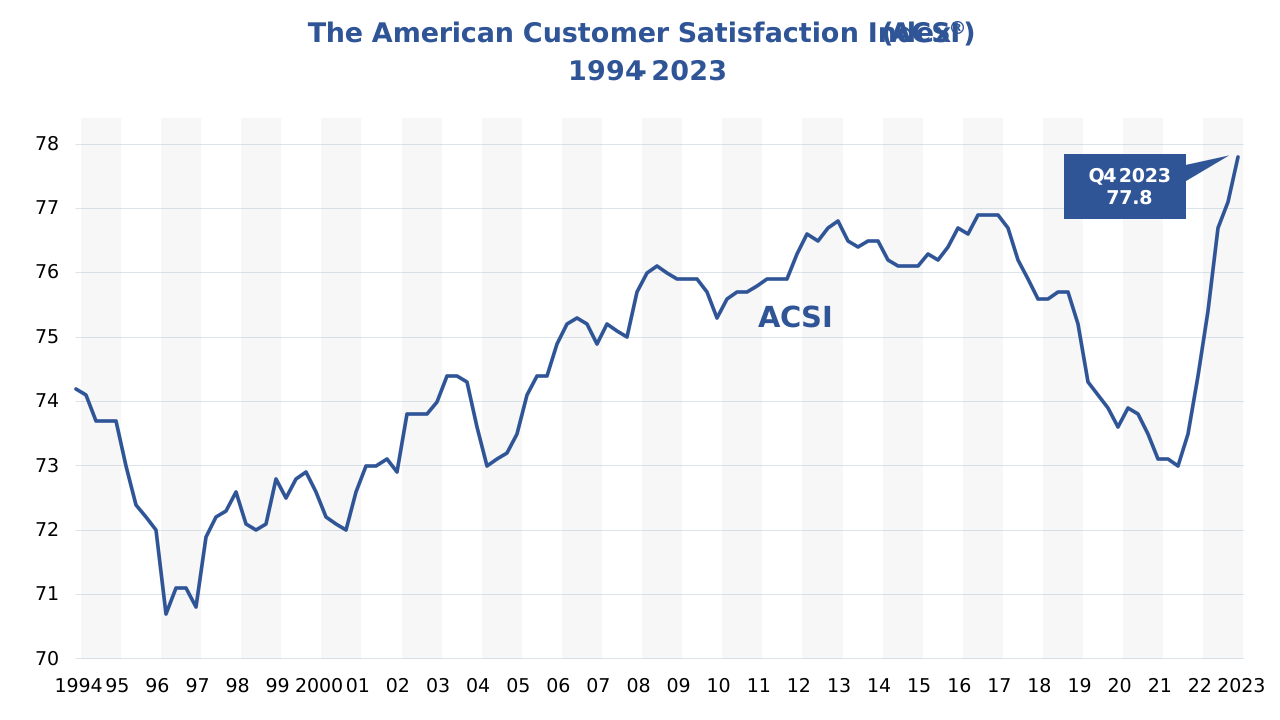
U.S. Overall Customer Satisfaction
National ACSI Q4, 2023
In the 1990s, business focus on customer satisfaction was in its infancy and the satisfaction decline between 1994 and 1997 came at a time when profits were generated from efficiencies in production rather than from satisfied customers.
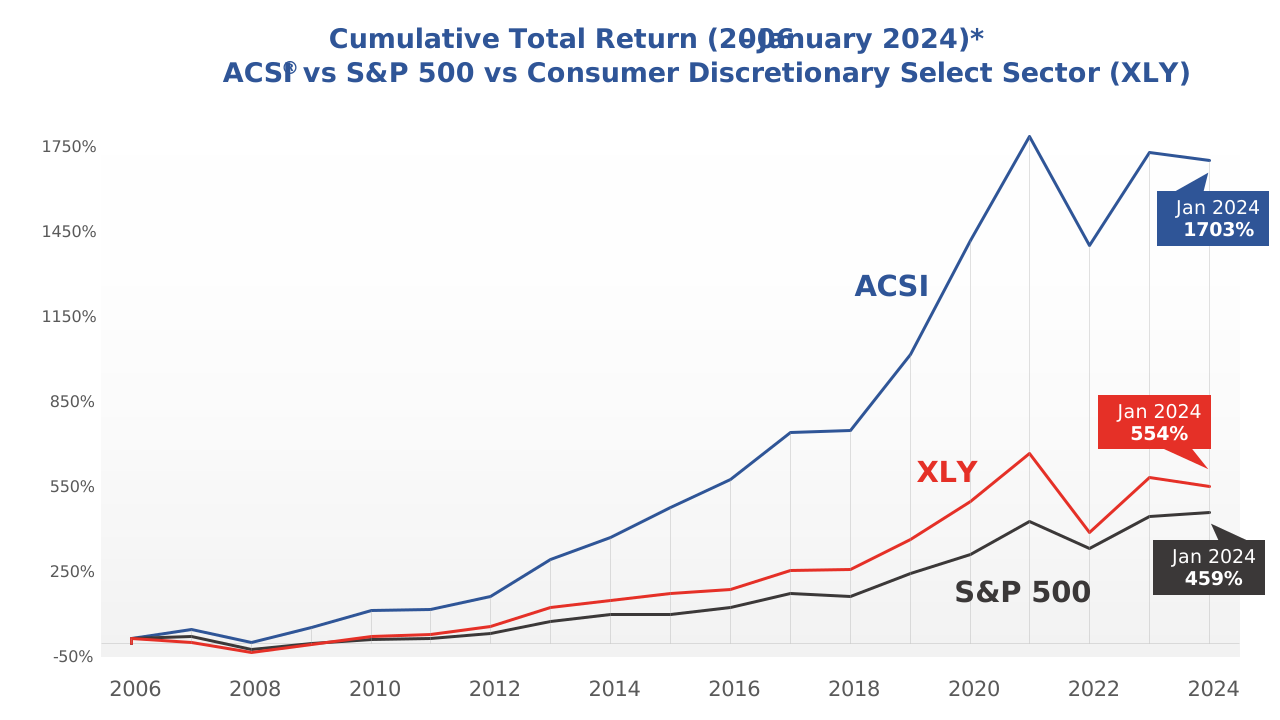
ACSI Portfolio vs. S&P 500
Companies with high ACSI scores typically do very well in the stock market. If one created a portfolio of the top 30-35 ACSI companies in their respective industries each quarter, weighted by customer satisfaction elasticity to customer retention, it would demonstrate something quite extraordinary.
The ACSI® Difference
The American Customer Satisfaction Index is the only national cross-industry measure of customer satisfaction that represents the U.S. economy. Organizations of all types from a wide range of diverse industries use the respected ACSI methodology to obtain science-based insights across the complete arc of the customer experience.
Cross-Industry Comparison
Offers unique benchmarking capabilites with other industries and select best-in-class companies.
Proprietary Methodology
Stable multivariable modeling system for measuring customer satisfaction. Produces accurate, reliable customer experience data.
Unique Benchmarking
The only uniform, national, cross-industry measure of customer satisfaction.
Predictive Capabilities
Cause-and-effect model measures the drivers and outcomes of customer satisfaction.
ACSI Products




ACSI In The News

What a new national survey says about customer service from Charlotte’s big banks



Walmart and Target are gaining ground on Costco in customer satisfaction

H-E-B, Costco or Publix? These supermarkets tied for best customer satisfaction nationwide




H-E-B ranks first in customer satisfaction study. What did it tie with — and what did it dethrone?